
About the Inclusive Education Leadership Framework
Our Philosophy: High Ambition Meets Inclusive Practice
Great schools are both inclusive and high-achieving for all learners—one cannot exist without the other. In an educational landscape shaped by diminishing financial resources and complex social challenges, inclusive leadership is vital to building capacity within our communities. Schools are more than places of learning; they are anchors of support and trust, connecting families, communities and wider public services.
The Inclusive Education Leadership Framework (IELF) brings this vision into everyday practice, connecting educational research with ethical, purposeful leadership. We believe that inclusive leadership goes beyond competency lists and performance metrics. It lives in relational trust, shared values and the everyday decisions and interactions that shape our educational communities.
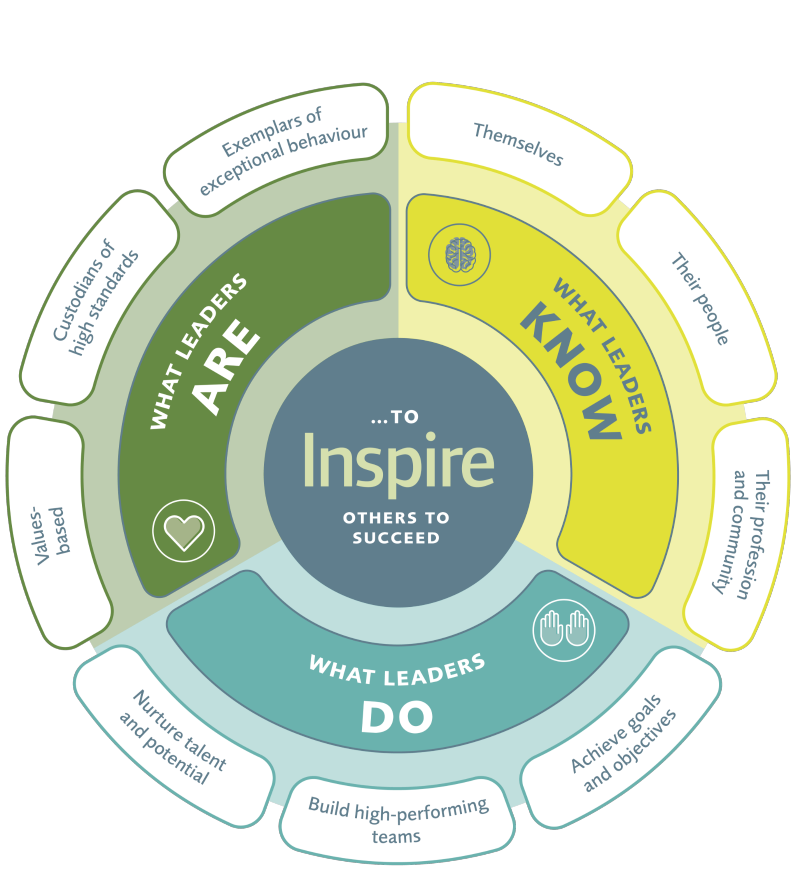
At the heart of the framework are three interconnected pillars:
What Leaders ARE, What Leaders KNOW and What Leaders DO.
Within each pillar sit specific strands and sub-strands that bring inclusive leadership to life, providing a shared language for reflection, meaningful professional dialogue and continuous growth. Rather than standalone competencies or a compliance exercise, these dimensions of leadership work together to shape how we think, relate to others and act.
The true power of the IELF lies in the relationship between these three pillars. Who we ARE—our values, beliefs and character—influences what we seek to KNOW, including how we understand ourselves, others and the wider contexts in which we work. What we KNOW informs what we choose to DO—our decisions, behaviours and actions.
Equally, what we DO, and the impact of our actions, challenges our assumptions, deepens our understanding and shapes who we continue to become as leaders.
Inclusive leadership is a continuous interaction between who we are, what we know and what we do—strengthened through reflection, learning and a commitment to making a positive difference.
The Three Pillars of Inclusive Leadership
What Leaders ARE
What Leaders KNOW
What Leaders DO
Who is the Framework For?
The IELF is designed for everyone across our educational communities. Whether you are a teaching assistant nurturing a child’s emotional wellbeing, an estates or finance colleague ensuring that essential systems and services run effectively, a classroom teacher developing the learning of others, or an executive shaping strategic direction, everyone has the capacity to lead and make a meaningful difference.
Leadership is not confined to formal positions of responsibility. It is exercised through the decisions we make, the relationships we build and the influence we have on others every day.
Navigating the Continuum of Influence
Leadership is not defined by rank, job title or position. It is expressed through the influence we have on ourselves, others and the wider communities we serve.
The IELF recognises that leadership is fluid and that our influence can extend across different contexts, responsibilities and situations. The Continuum of Influence describes five interconnected stages, each reflecting a different scope of leadership:
Stage 1: Self-Leadership (The Foundation of Personal Impact)
Stage 2: Team Leadership (Leading Through Collaboration)
Stage 3: Operational Leadership (Leading Systems and Processes)
Stage 4: Strategic Leadership (Leading the Organisation)
Stage 5: System Leadership (Leading the Wider Community)
These stages are not a fixed hierarchy or a linear progression. We may exercise influence across several stages at the same time, depending on our responsibilities, experiences and the circumstances we encounter.
Crucially, no stage replaces another. Self-leadership remains fundamental at every level, and the capacity to positively influence others is not dependent on holding a formal leadership position.

The IELF is not meant to sit on a shelf; it is a living toolkit designed to support personal reflection, professional growth, and collective action across our schools.