
To build a school culture where curriculum design makes a lasting difference, we need to move away from high-stakes snapshot monitoring toward understanding long-term retention and schema building. Aligned with the Inclusive Education Leadership Framework, evaluating curriculum isn’t just an administrative checklist—it depends on the dynamic, interconnected alignment between what leaders are, what leaders know, and what leaders do.
Inclusive Leadership in Curriculum Evaluation
Leadership isn’t defined by titles or monitoring clipboards, but by how we weave values, research and deliberate practice together through what leaders are, know and do:
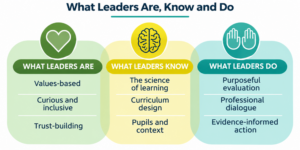
1. What Leaders Are: Curiosity, Inclusion, and Trust
A leader’s mindset sets the foundation for authentic evaluation. Approaching discussions with staff and pupils with warmth, openness, and genuine interest turns formal monitoring into meaningful dialogue. When psychological safety comes first, staff and children feel secure enough to share what they genuinely know and where they struggle.
2. What Leaders Know: Understanding Learning and Learners
Effective evaluation builds on this culture of trust with a deep understanding of how memory works, alongside a secure knowledge of the children themselves. True curriculum impact shows how well children build and retain mental models over time. Recognising how memory operates, how cognitive overload happens, and how memory cues function helps leaders explore whether a gap stems from insecure learning or difficulties with retrieval. Equally important is understanding children’s individual needs, starting points, backgrounds and experiences, recognising how these influence their access to learning and ability to demonstrate what they know.
3. What Leaders Do: Intentional, Strategic Action
Values and research only change outcomes when translated into daily action. That means replacing random drop-ins with structured, practical tools like the Curriculum Evaluation Tool (CET). It requires preparing before talking with pupils: choosing focus areas (like core vocabulary, task design, or retrieval strength), reviewing planned learning sequences, and following up through practical coaching.
Rethinking Child Voice: The Power of Scaffolding and Visual Priming
One of the most practical shifts in this approach is changing how we talk with pupils about their learning.
Traditionally, pupil voice felt a bit like a pop quiz. A leader might ask a broad, unanchored question out of nowhere: “What can you tell me about the Romans?” When a child froze, it was easily mistaken for poor teaching or forgotten learning.
In reality, long-term memory relies on interconnected networks. An unprompted question forces an overwhelming search across working memory. By contrast, using visual priming cues—such as an image of a Roman soldier alongside workbooks, knowledge organisers, or key vocabulary—provides a supportive anchor for recall without giving away answers or over-scaffolding.
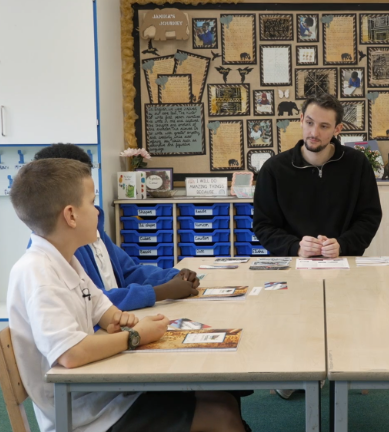
These principles can be seen in practice in the film below, where James Porter, Assistant Headteacher, leads a pupil book discussion with Year 5 children about their learning on the Windrush Generation, six weeks after completing the topic.
Through visual priming, purposeful questioning and responsive dialogue, James explores what pupils know, remember and understand, while creating an inclusive, low-stakes environment in which children can confidently share their thinking.
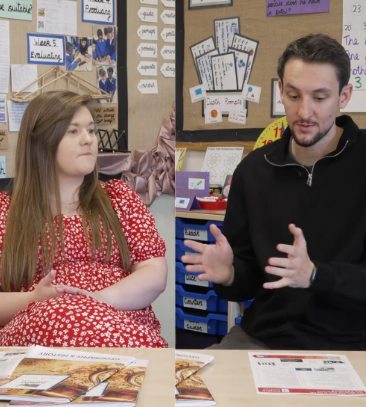
The film also captures the subsequent professional discussion with Sarah Goodwin, Phase Leader, as they reflect on the evidence gathered and identify next steps for improvement.
A Three-Stage Framework for Inclusive Pupil Dialogue:
Stage 1: Priming (Activating Schema)
Direct pupils using visual cues, knowledge organisers, or concrete artefacts to activate existing background knowledge and lower immediate working memory demands.
Stage 2: Inviting (Accessible Exploration)
Ask low-stakes, open-ended conversational questions that invite every child to participate, ensuring fair access for younger pupils, pupils learning English as an additional language (EAL), and those with special educational needs and disabilities (SEND).
Stage 3: Deepening (Probing Understanding)
Move beyond simple fact retrieval to explore conceptual connections, asking pupils to explain the why and how behind big ideas across topics.
Evaluating Broader Curriculum Impact and the Global Curriculum
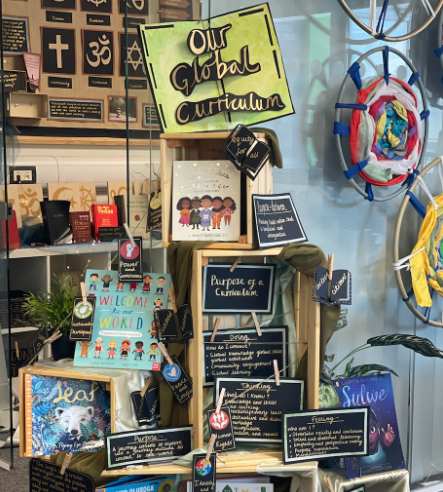
Curriculum evaluation should look beyond isolated subject knowledge to explore how learning connects across disciplines and to real-world contexts. Our Global Curriculum is underpinned by education for global citizenship: through six global themes, pupils develop knowledge and understanding, skills and attitudes that help them make sense of the world and their place within it.
Evaluating this wider impact means looking beyond ‘sticky knowledge’ to the affective domain: how pupils consider different perspectives, express empathy and reflect on attitudes and values such as fairness, belonging and social responsibility. Our Global Curriculum also encourages children to apply learning through purposeful changemaker projects in their communities. Pupil discussions provide important insights into these ambitions, alongside other evidence gathered over time.
Turning Findings Into Action
Evaluation only matters if it leads to meaningful support. Once pupil discussions, book reviews, and classroom visits are completed, leadership teams need dedicated space to review evidence collaboratively, aligning findings directly with instructional coaching.
Shared Moderation: Reviewing evidence together against shared criteria helps ensure feedback stays balanced, constructive, and objective.
Clear Next Steps: When areas for growth are identified, team members agree on practical actions—defining who takes ownership, when it will happen, and how support will be provided.
Ongoing Coaching: Findings feed straight into team planning and regular coaching cycles. Instead of spending meeting time on general updates, staff focus on refining teaching strategies, adjusting shared plans, and strengthening classroom practice.
Our Curriculum Evaluation Tool (CET) provides a structured, collaborative approach to this process. Each term, leaders triangulate evidence from pupil discussions, learning walks and book reviews, evaluating selected aspects of teaching and learning against shared rubrics. These include curriculum content, teaching sequences, vocabulary, task design, questioning and retrieval, and feedback. Leaders focus on strands aligned with school improvement priorities, using the tool to identify strengths, agree specific refinements and track progress over time. This creates a shared understanding of curriculum quality across year groups and ensures that evaluation leads to purposeful, evidence-informed action.

For leaders interested in exploring the approach, we are sharing three resources to support professional dialogue and evidence-informed evaluation. They can be adapted to different school contexts.
Curriculum Evaluation Tool (CET) – Termly Evaluation Tracker — a structured Excel tool for leaders to record evaluation findings against the rubrics, identify strengths and priorities, agree actions and monitor improvement over time.
Curriculum Evaluation Tool Rubrics— shared criteria for evaluating curriculum and teaching.
Curriculum Evaluation Tool Guidance — a slide deck introducing the evaluation approach and process.
Pupil Questions — examples of priming, inviting and deepening questions.
A Case Study: What does Action look like?
To see how this cycle could operate in practice, consider an illustrative example of how an evaluation finding might inform pupil dialogue and instructional coaching:
The Evaluation Finding:
“Teachers are working hard to balance classroom talk strategies—balancing agreeing, challenging, building on ideas, and cold calling. However, more confident pupils consistently dominate the ‘building’ phase of discussions, while quieter pupils step back.”
Instead of leaving this as a vague target on a monitoring form, effective instructional leadership translates this insight directly into what leaders know, do, and are:
What Leaders Are & What Leaders Know: Addressing the Root Cause
What Leaders Do: Concrete Planning & Instructional Coaching
Fostering Collective Ownership Through Inclusive Leadership
Empowering Phase Leaders and Building Trust
When curriculum evaluation is something done with teachers rather than to them, trust builds across the school.
For middle and subject leaders, participating directly builds practical diagnostic skills. It helps them observe how learning progresses across year groups firsthand, keeping leadership rooted in real classroom context rather than abstract theory. By focusing on equity, inclusion and the long-term impact of the curriculum rather than judging individual teacher performance, evaluation can help reduce anxiety and build collective responsibility. Teachers and leaders work together to address learning gaps, refine support and improve experiences for every pupil.
By intertwining who we are as inclusive leaders with what we know about cognitive research and what we do in strategic practice, evaluation transforms from an exercise in compliance into a continuous cycle for school-wide improvement.
These principles of trust, collaboration and collective responsibility are explored further in the film below. Aimi Vdovin, Trust Leader, speaks with James Porter, Assistant Headteacher, and Sarah Goodwin, Phase Leader, about how inclusive leadership shapes their approach to curriculum evaluation.
Through the lens of what leaders are, know and do, they reflect on the importance of professional dialogue, shared ownership and evidence-informed decision-making, demonstrating how effective leadership creates the conditions for meaningful and sustained improvement in teaching and learning.